
Finishing a manuscript does not always make the next step obvious.
An author may know the middle feels slow but not understand why. A nonfiction writer may have strong information in every chapter but no clear progression from one idea to the next. Beta readers may disagree about the main character. One person says the opening is excellent. Another says the story takes too long to begin.
At this point, paying someone to polish every sentence may be the wrong investment.
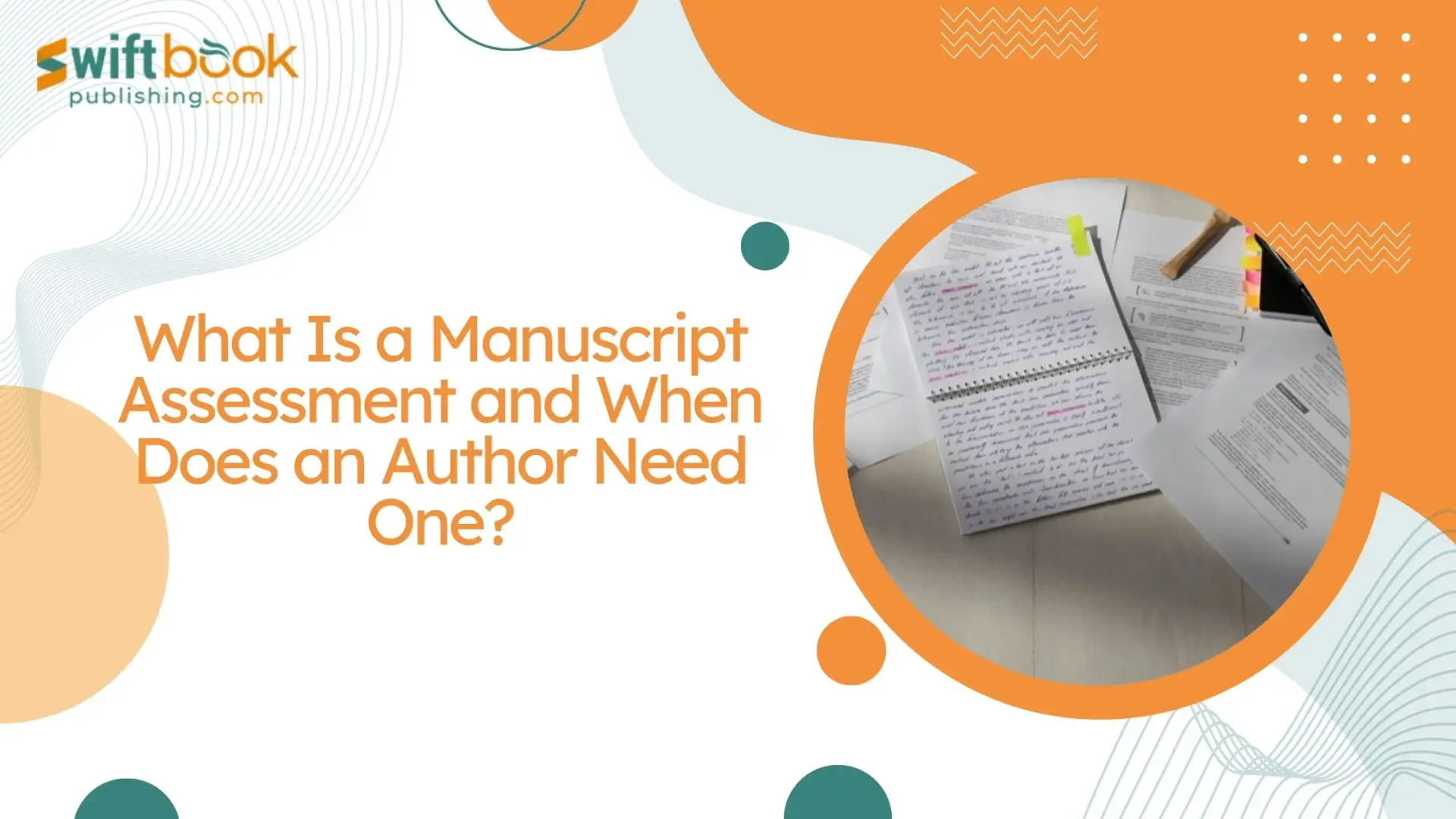
A manuscript assessment gives the author a professional evaluation of the book as a whole before more detailed editing begins. The editor reads the manuscript, identifies its most important strengths and problems, and usually delivers the findings in an editorial report with practical recommendations for revision.
Reedsy currently describes an editorial assessment as a detailed evaluation of a manuscript’s strengths and weaknesses, particularly in areas such as plot, structure, characterization, and other big-picture concerns. Unlike a developmental edit, an assessment typically does not include extensive direct editing throughout the manuscript.
Think of it as a diagnosis.
The assessment tells you what needs attention and where to concentrate your revision effort before you pay for more intensive treatment.
The Assessment Looks at the Book From a Reader’s Distance
Authors usually know their manuscripts too well.
They remember scenes that were deleted three drafts ago. They understand a character’s motivation even when it never reaches the page. They know why Chapter Seven matters because they spent months researching it.
A new reader knows none of this.
An assessor approaches the manuscript with enough editorial distance to ask questions such as:
- Does the opening establish the book effectively?
- Is the intended audience clear?
- Does the structure support the story or argument?
- Where does momentum weaken?
- Are important ideas repeated?
- Do character decisions feel motivated?
- Does the ending deliver on the beginning?
- Does the book meet reasonable expectations for its genre?
- Which problems need to be fixed first?
The purpose is not to catch every typo.
It is to determine whether the book works before time and money are spent polishing details that may later disappear.
Fiction Assessments Focus on the Reader’s Experience
For a novel, the report may examine:
- Plot structure
- Character development
- Point of view
- Pacing
- Conflict
- Stakes
- Setting
- Dialogue
- Genre expectations
- Opening chapters
- Midpoint
- Climax
- Ending
- Theme
- Market positioning
Imagine a thriller in which the first 50 pages are atmospheric but contain little immediate danger.
An assessment might explain:
The central threat does not become visible until Chapter Five. The opening establishes setting and character effectively, but the reader does not yet have a strong narrative question. Consider moving the anonymous message from Chapter Five into the first two chapters so the quieter character material develops under tension.
The assessor has not rewritten the scene.
They have identified the reading problem, explained its effect, and suggested a revision direction.
Nonfiction Assessments Ask Whether the Book Delivers Its Promise
A nonfiction manuscript requires a somewhat different analysis.
The editor may evaluate:
- Central thesis
- Target reader
- Chapter sequence
- Repetition
- Evidence
- Examples
- Case studies
- Tone
- Authority
- Practical usefulness
- Reader progression
- Market position
Suppose a leadership book promises practical guidance for first-time managers.
The assessment might note:
Chapters Two through Four establish the challenges facing new managers clearly, but the manuscript does not introduce a usable framework until Chapter Six. Consider moving the core model earlier so readers can use it as a lens for the situations that follow.
The issue is not grammar.
It is architecture.
The same manuscript might later need copyediting, fact-checking, indexing, and proofreading, but those services will be more effective after the overall structure makes sense.
The Editorial Report Is Usually the Main Deliverable
A manuscript assessment commonly results in a written editorial letter or report.
Reedsy describes the service as a whole-manuscript evaluation that provides detailed feedback and suggested next steps, generally without direct line-by-line editing or annotation throughout the manuscript.
The exact length and format vary according to:
- Word count
- Genre
- Complexity
- Editor
- Scope
- Author questions
A short picture book will not require the same report as a 120,000-word fantasy novel.
The author should confirm the deliverables before hiring the editor.
Ask whether the service includes:
- Written report
- Margin comments
- Sample edits
- Follow-up call
- Revision questions
- Second review
- Market feedback
Do not assume these are automatically included.
Sample Manuscript Assessment Report Headings
A useful report might be organized like this:
-
Overall Editorial Impression
A concise assessment of how the manuscript currently works.
-
Intended Reader and Positioning
Who the book appears to serve and whether the manuscript consistently addresses that audience.
-
Structure
How effectively chapters, scenes, sections, or arguments are organized.
-
Opening
Whether the book establishes interest, direction, and reader expectations early enough.
-
Plot or Central Argument
For fiction, this covers narrative development and cause-and-effect progression.
For nonfiction, it examines the thesis, logic, and development of ideas.
-
Character or Case-Study Development
Fiction reports may evaluate motivation, relationships, and character arcs.
Nonfiction reports may examine examples, interviews, case studies, or reader scenarios.
-
Pacing
Where the book moves too slowly, too quickly, or unevenly.
-
Voice and Tone
Whether the writing style fits the subject, genre, and intended audience.
-
Market and Genre Expectations
How the manuscript compares with reasonable reader expectations in its category.
-
Priority Revisions
The changes that should happen before smaller issues receive attention.
-
Recommended Next Editorial Step
Whether the manuscript appears ready for developmental editing, line editing, copyediting, another author revision, or another specialist service.
A report becomes much more useful when it prioritizes problems instead of presenting 40 unrelated observations with equal importance.
Manuscript Assessment and Developmental Editing Are Not the Same Service
These two services overlap because both examine large-scale issues.
The main difference is depth.
The Editorial Freelancers Association defines developmental editing as work involving content, organization, and genre considerations. Reedsy similarly describes developmental editing as a deeper intervention into structure, characterization, plot, pacing, and other big-picture elements, usually supported by both an editorial letter and detailed comments inside the manuscript.
A manuscript assessment may say:
The middle section loses momentum because three chapters repeat the same emotional conflict.
A developmental editor may then go further by:
- Identifying which chapter should be removed
- Suggesting a different sequence
- Commenting on individual scenes
- Flagging repeated dialogue
- Recommending where new information should enter
- Working directly throughout the manuscript
The assessment points toward the repair.
Developmental editing helps execute the repair plan in greater detail.
The Main Editorial Services Solve Different Problems
| Service | Primary Question | Typical Work | Best Stage |
|---|---|---|---|
| Manuscript assessment | What is working, what is not, and what should I revise first? | Whole-book report and revision priorities | After a complete draft or significant self-revision |
| Developmental editing | How should the book be restructured or substantially improved? | Detailed structural guidance, manuscript comments, editorial letter | When major guided revision is needed |
| Line editing | How can the prose become stronger and more effective? | Sentence and paragraph-level work on voice, flow, rhythm, clarity, and style | After structure is stable |
| Copyediting | Is the language clear, correct, and consistent? | Grammar, spelling, punctuation, usage, consistency, and style | After major rewriting |
| Proofreading | What errors remain in the final formatted book? | Final corrections to text and layout | After design and typesetting |
The EFA distinguishes developmental work from detailed language editing and proofreading, while CIEP similarly places structural editing before copyediting and final proof review.
The correct service depends on what is wrong with the manuscript, not simply how close the author hopes they are to publication.
Line Editing Works at the Prose Level
An assessment might observe:
The narrative voice becomes noticeably more formal in the historical sections, creating distance from the protagonist.
A line editor works directly with the language creating that effect.
They may address:
- Sentence rhythm
- Word choice
- Repetition
- Transitions
- Voice
- Paragraph flow
- Dialogue
- Unnecessary explanation
- Awkward phrasing
Line editing is valuable once the manuscript’s major content is reasonably stable.
There is little benefit in carefully polishing three pages of prose if the next structural revision removes the entire chapter.
Copyediting Comes After Major Rewriting
Copyediting focuses more heavily on consistency and correctness.
The copyeditor may check:
- Grammar
- Spelling
- Punctuation
- Capitalization
- Hyphenation
- Numbers
- Dates
- Internal consistency
- Basic clarity
- References
- Style conventions
The EFA describes copyediting as work involving mechanics, consistency, and language-level corrections after the manuscript’s larger concerns have been addressed.
This stage may also produce or expand a project style sheet.
An assessment does not usually perform this detailed cleanup because the author’s next step may involve substantial rewriting.
Proofreading Belongs Near the End
Proofreading is the final editorial quality-control stage.
The proofreader works after the manuscript has been edited and formatted into pages or its final publication form.
CIEP explains that proofreading checks the proof for remaining errors and confirms that earlier changes and production work have been implemented correctly.
A proofreader may catch:
- Typos
- Missing words
- Incorrect headers
- Page-number problems
- Awkward line breaks
- Formatting inconsistencies
- Errors introduced during layout
They should not be expected to repair a weak plot or reorganize a nonfiction argument.
A perfectly proofread book can still be structurally unsuccessful.
An Assessment Makes Sense When You Can Revise Independently
A manuscript assessment is particularly useful for authors who want professional guidance but are comfortable doing the rewriting themselves.
Consider one when:
- You have completed a full draft.
- You have revised as far as you can alone.
- Beta readers are giving contradictory feedback.
- You know something is not working but cannot diagnose it.
- You want an objective professional response.
- You are uncertain which type of editing you need next.
- You are preparing to query literary agents.
- You want to test whether a self-publishing manuscript is ready for deeper editing.
- Your budget cannot support an intensive developmental edit yet.
Reedsy positions editorial assessment as an early-stage, lower-cost alternative to full developmental editing and notes that it can help authors avoid paying for detailed work on material they later remove or rewrite.
This is where the service can become economically useful.
You are paying first for clarity about the problem.
Developmental Editing May Be Better When You Need Hands-On Help
Choose deeper developmental support when:
- You understand that the book has structural problems but do not know how to solve them.
- Several storylines need to be reorganized.
- Character motivation requires detailed scene-level attention.
- The nonfiction argument needs extensive rebuilding.
- You want comments throughout the manuscript.
- You want an editor involved during revision.
- The project requires more than a high-level roadmap.
An assessment can tell you that the ending does not follow naturally from the earlier chapters.
A developmental editor can work through the chapters that need to change so the ending becomes earned.
Do Not Hire an Assessor Too Early
A three-chapter draft usually does not provide enough information for a genuine whole-manuscript assessment.
The editor needs to see:
- Beginning
- Middle
- Ending
- Full argument
- Character arcs
- Chapter progression
- Major examples
- Overall pacing
A partial manuscript may be better suited to:
- Book coaching
- Opening-chapter critique
- Proposal review
- Developmental consultation
- Sample edit
Complete enough of the project for the editor to evaluate the question you are actually paying them to answer.
Give the Editor a Useful Brief
Do not send only:
Please tell me what you think.
Provide:
- Title
- Genre
- Word count
- Intended reader
- Publishing goal
- Comparable books
- Revision history
- Previous professional editing
- Major concerns
- Submission or publication plans
Then ask specific questions.
For example:
- Does the protagonist become active early enough?
- Is the dual timeline easy to follow?
- Does the business book become repetitive?
- Is the intended audience too broad?
- Does the memoir have a clear narrative arc?
- Are any chapters unnecessary?
- Is the manuscript close to being ready for querying?
A good assessor will still identify problems you did not anticipate, but a useful brief reveals what you are already struggling with.
Choose an Editor Who Understands the Book’s Category
Editorial skill is not completely interchangeable across genres.
A romance editor should understand romance reader expectations.
A children’s editor should understand age categories.
A business-book editor should be comfortable evaluating:
- Reader promise
- Organization
- Frameworks
- Examples
- Professional tone
Review:
- Genre experience
- Previous titles
- Client testimonials
- Publishing background
- Service scope
- Communication style
- Sample reports where available
The EFA maintains a member directory covering multiple editorial specialties, which can help authors research freelance professionals.
Price should not be the only selection factor.
An inexpensive assessment from the wrong specialist can produce recommendations that do not fit the book.
The Report Should Determine What Happens Next
A manuscript assessment is valuable only when it changes the revision plan.
After receiving it:
- Read the entire report.
- Do not revise immediately.
- Identify repeated concerns.
- Separate major issues from smaller ones.
- Ask permitted follow-up questions.
- Create a revision sequence.
- Handle structural changes before sentence-level polishing.
- Decide which professional service is needed next.
The assessment may reveal that the author is ready for developmental editing.
It may also reveal that the manuscript simply needs another independent revision before professional line or copyediting.
Either outcome is useful.
Marketing Should Wait Until the Manuscript Is Stable
Authors are often tempted to move into promotion because marketing feels like visible progress.
But a book still undergoing structural work is not ready for final launch assets.
A book sell sheet should describe the finished product accurately.
Goodreads marketing for authors works better when the book’s positioning, description, and genre are settled.
An author email list can certainly be built early, but subscribers should not be given publication promises the manuscript cannot support.
Similarly, authors planning to turn podcast into a book may benefit from an assessment once the episodes have been shaped into a complete manuscript. The editor can determine whether the material reads like a cohesive book instead of a collection of lightly edited transcripts.
Audio production should also wait. An audio book services , narrator audition is premature if the manuscript still requires major rewriting, and the final audiobook production cost depends partly on the finished word count and running time.
A book trailer script should promote the book readers will actually receive.
A book cover design brief should be created once genre, audience, tone, and positioning are clear enough for the designer to work confidently.
Editorial stability makes every later investment more reliable.
Frequently Asked Questions
Does a Manuscript Assessment Include Line-by-Line Editing?
Usually not. A manuscript assessment primarily provides big-picture feedback through an editorial report. Some editors may include limited margin comments, but detailed line editing should not be assumed unless it is specifically included in the agreement.
When Should an Author Get a Manuscript Assessment?
A useful time is after completing and self-revising a full draft but before investing in detailed editing, design, or production. The manuscript should be complete enough for the editor to evaluate its overall structure and reader experience.
Is a Manuscript Assessment Cheaper Than Developmental Editing?
It often is because the editor provides a high-level report without the extensive manuscript annotation and detailed intervention usually included in developmental editing. Actual pricing varies by editor, genre, length, and scope.
Can a Manuscript Assessment Replace Developmental Editing?
Sometimes an author can use the report to complete structural revisions independently and move on to the next stage. Manuscripts requiring extensive hands-on guidance may still benefit from a developmental edit.
Can an Assessment Tell an Author Whether a Book Is Ready to Query?
It can provide a professional opinion about readiness, opening strength, structure, genre positioning, and major weaknesses. It cannot predict whether a literary agent will offer representation.
What Should an Author Do After Receiving the Assessment?
Read the report carefully, identify the highest-priority issues, develop a revision plan, and complete major structural work before investing in line editing, copyediting, proofreading, design, or launch materials.