
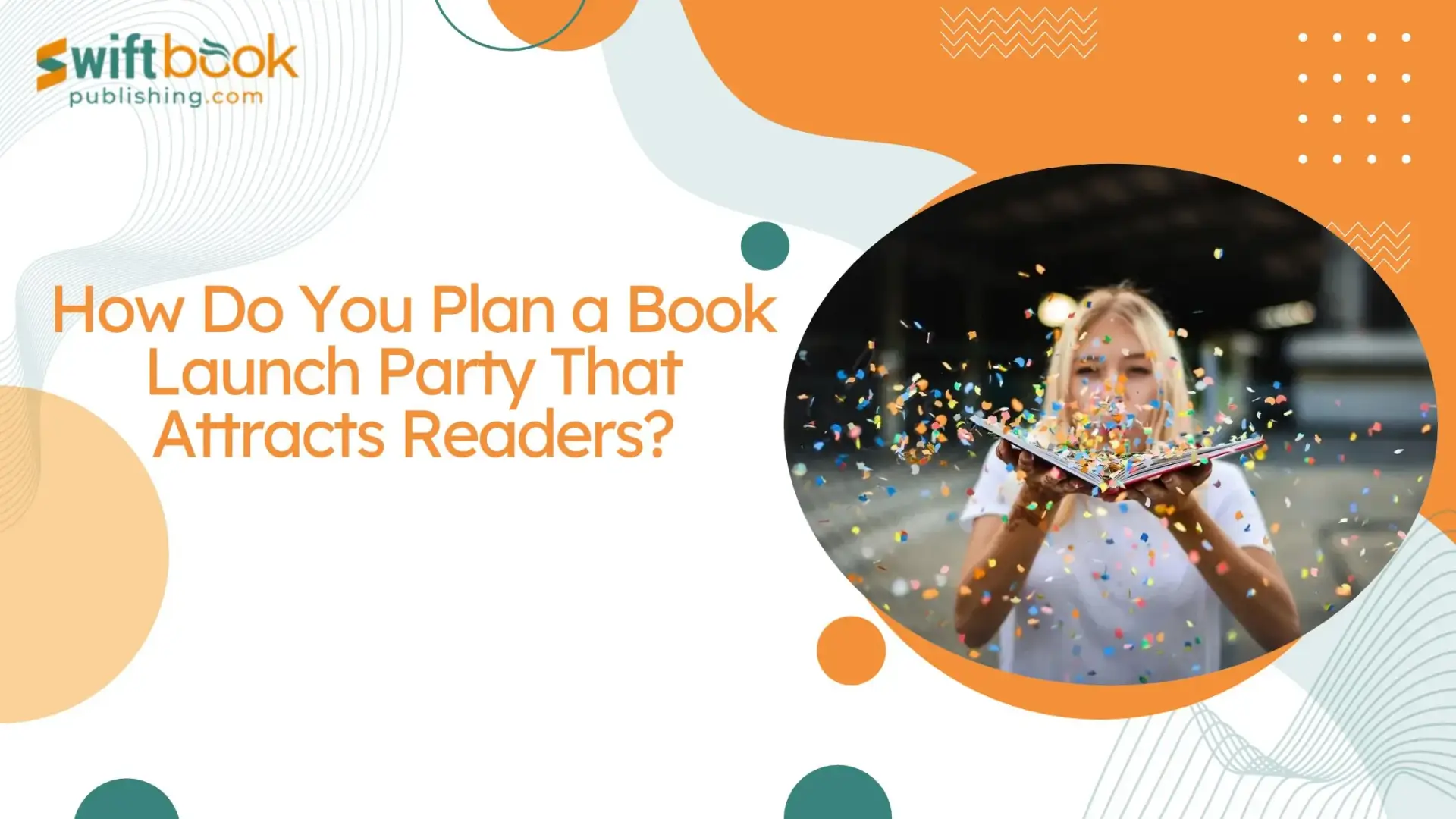
The best book launch party ideas start with something readers would enjoy even if they’ve never heard of your book. A mystery launch could open with a clue from the first chapter. A cookbook launch could feature a short demonstration of a recipe guests can make at home. The activity gives people a reason to come, and the book gives the evening a focus.
A bookstore signing usually centers on meeting the author and getting a signed copy. A launch party marks the release with a shared program, whether that’s a reading, a conversation, or an activity tied to the book. You can finish with a signing, but the invitation should make clear what happens before anyone gets in line.
Choose a format that fits the book and its readers
An in-person launch works well when you can reach readers in one area or when the book has a local connection. An independent bookstore may already draw your genre’s readers and can tell you whether it handles sales. A library or community center may suit a public conversation, though you’ll need to ask about its sales policy. A café, museum, or other partner venue can make sense when the book’s subject gives the host a reason to invite its own audience.
Before booking, check room capacity, seating, access, sound, and where people will gather before and after the program. Ask what the venue includes in its fee. A room with a microphone, chairs, and a staff member on hand may be easier to work with than a cheaper space where you have to bring everything yourself.
A virtual launch makes sense when your readers live in different places. Give it a clear structure: a host leads the conversation, an excerpt breaks up the discussion, and a moderator brings in audience questions. Send the joining link in advance, explain how to participate, and share the purchase link in the chat and follow-up email.
A hybrid launch works best when someone can look after online guests while you focus on the room. Test whether remote listeners can hear the host and audience questions. If you don’t have someone to run the stream and monitor the chat, consider an in-person event with a separate online Q&A.
Three book launch party ideas by budget
These are illustrative U.S. planning budgets. They exclude book inventory and your time. Confirm what’s included in any venue or vendor quote before committing.
Low budget: $150 for a partner-hosted reading
Ask a bookstore, library, or community partner about hosting a short reading and conversation in a room it already uses for events. If the space is free, you could set aside $60 for refreshments, $30 for printing and signs, and $60 for travel or unexpected expenses. For a virtual version, put the money toward a moderator or technical support if you need it. Keep the program short enough to rehearse from beginning to end.
Mid budget: $600 for a themed local event
Book a small room and add one element that connects guests to the book. A travel memoir could include a short photo presentation and a moderated conversation. An illustrative budget is $250 for the room, $150 for refreshments, $100 for sound or event help, and $100 for display materials and a reserve. Put money into making the program easy to hear and follow before adding décor.
High budget: $1,500 for a produced launch
A larger event can make sense if you have a partner audience, enough confirmed interest, or a reason to reuse the recording. You might allocate $600 for the venue, $400 for sound and recording, $300 for refreshments, and $200 for staffing, signs, and a reserve. If you’re considering book trailer services, decide where the finished trailer will go after the event. A clip you can reuse on your book page and in later promotions has a clearer purpose than a video made for one screening.
Build the party into your 90-day book launch plan
Eight to twelve weeks out: Choose the event goal. You might want to introduce the book to local readers, sell copies, or build relationships with book clubs and bookstores. Pick the format, set a spending cap, and confirm the venue and release timing. Agree on who sells the books and who supplies stock.
Four to six weeks out: Publish an RSVP page. Include the date, time and time zone where relevant, address or virtual format, access details, and what guests can expect. Send personal invitations to people who are likely to enjoy the event. Give the host ready-to-use copy, an image, and the RSVP link.
One to two weeks out: Confirm the order and delivery of books. Rehearse the reading, test the sound or stream, and check any purchase links. Send a reminder with the details guests need on the day. Ask the host to confirm who will greet guests, introduce you, and handle checkout or online questions.
Within two days afterward: Thank attendees and the host. Share the purchase link and any material you promised, such as a discussion guide or an approved recording. Compare attendance, copies sold, and follow-up inquiries with the goal you set before spending.
Write an invitation that gives readers a reason to come
Lead with what people will get to do or hear. Put the title and event details right after it. “Join me to celebrate my book” works for people who already know you. A reader who’s just discovered your work needs a little more context.
Can you spot the clue before the detective does?
Join [Author] at [Venue] on [Date] at [Time] for the launch of [Title], a small-town mystery set during a county fair. Hear a short scene, compare theories, and stay for questions and signed copies. Admission is free. RSVP at [link].
For publicity, prepare an author media kit for a book launch with a short bio, credited headshot, book cover, description, event details, and media contact. If you use a book press release template, adapt the opening to a specific local angle. A novel set in a recognizable neighborhood or a launch co-hosted by a local historical society gives a community editor something to work with. Use a calendar listing when the date and program are the main story.
Sample run of show for a 60-minute launch party
- 0:00–0:10 | Arrival. Welcome guests, point out the book display, and tell them when the program starts. For a virtual event, use a short arrival window and explain how to ask questions.
- 0:10–0:15 | Host introduction. Introduce the author, give a brief premise, and tell guests how the hour will run.
- 0:15–0:25 | Reading or demonstration. Choose one excerpt or activity that makes sense to someone who hasn’t read the book.
- 0:25–0:40 | Conversation and questions. Give the moderator a few prepared questions so there’s an easy way to start.
- 0:40–0:45 | Closing. Thank the host and explain where to buy the book, get a copy signed, or find the replay if you’re offering one.
- 0:45–1:00 | Signing and conversation. Allow more time if you expect a line. Online, use this time for a final Q&A or close after sharing the purchase link.
Make books easy to find and buy
Display a cover facing out, a visible price, and a sign that points readers to checkout. If the venue handles sales, keep checkout and signing clearly marked so guests know which line to join. If you sell directly, test your payment setup and agree on who will run it while you’re speaking. A QR code can be useful for guests who want an ebook, audiobook, or sold-out edition. Test it on a phone and include a readable link if possible.
Order merchandise only if it adds something to the event. A recipe card or a printed map from the book can give readers something relevant to take home. If the budget is tight, spend it on enough books, clear signs, and sound people can hear from the back of the room.
Track the party separately from your other book marketing campaigns. RSVPs show interest, attendance shows who came, and sales show how many copies people bought. If your main goal was to meet local book clubs, a request for a future visit may matter more than the number of books sold that night. If you’re considering book marketing services, bring your event goal, venue, and spending cap to the conversation so you can get help with the part you need most.
Frequently asked questions
When should I hold my book launch party?
On or near release day is a good option if copies are available and the date works for your audience. A later event can be just as useful if it gives you a better venue or time slot. Confirm that guests can buy the book or place an order before announcing the event.
Do I need to rent a venue for a book launch?
No. A bookstore, library, café, or community partner may be willing to host an event that fits its audience. Ask what the space includes and whether there are fees, purchase requirements, or limits on book sales.
How long should a book launch party last?
About an hour is a useful starting point for a welcome, short reading, discussion, and signing. Leave extra time if you expect a long signing line. For an online event, you can shorten the arrival period and close once the questions are answered.
Should I charge admission?
Free admission is a simple choice when your goal is to introduce new readers to the book. A ticketed event may make sense if it includes a copy, a workshop, or a meal. State exactly what the ticket covers and how guests can get the book.
How many copies should I bring?
Ask the host about attendance at similar events and use RSVPs as one signal. Some guests will already own the book, and others will choose a digital edition. Confirm whether the venue is ordering copies and have a way to take orders or direct readers online if you sell out.
How is a book launch party different from a signing?
A launch party celebrates a release and gives guests a program to attend, such as a reading, interview, or demonstration. A signing centers on meeting the author and personalizing copies. You can include a signing at the end of the launch without making it the whole event.