
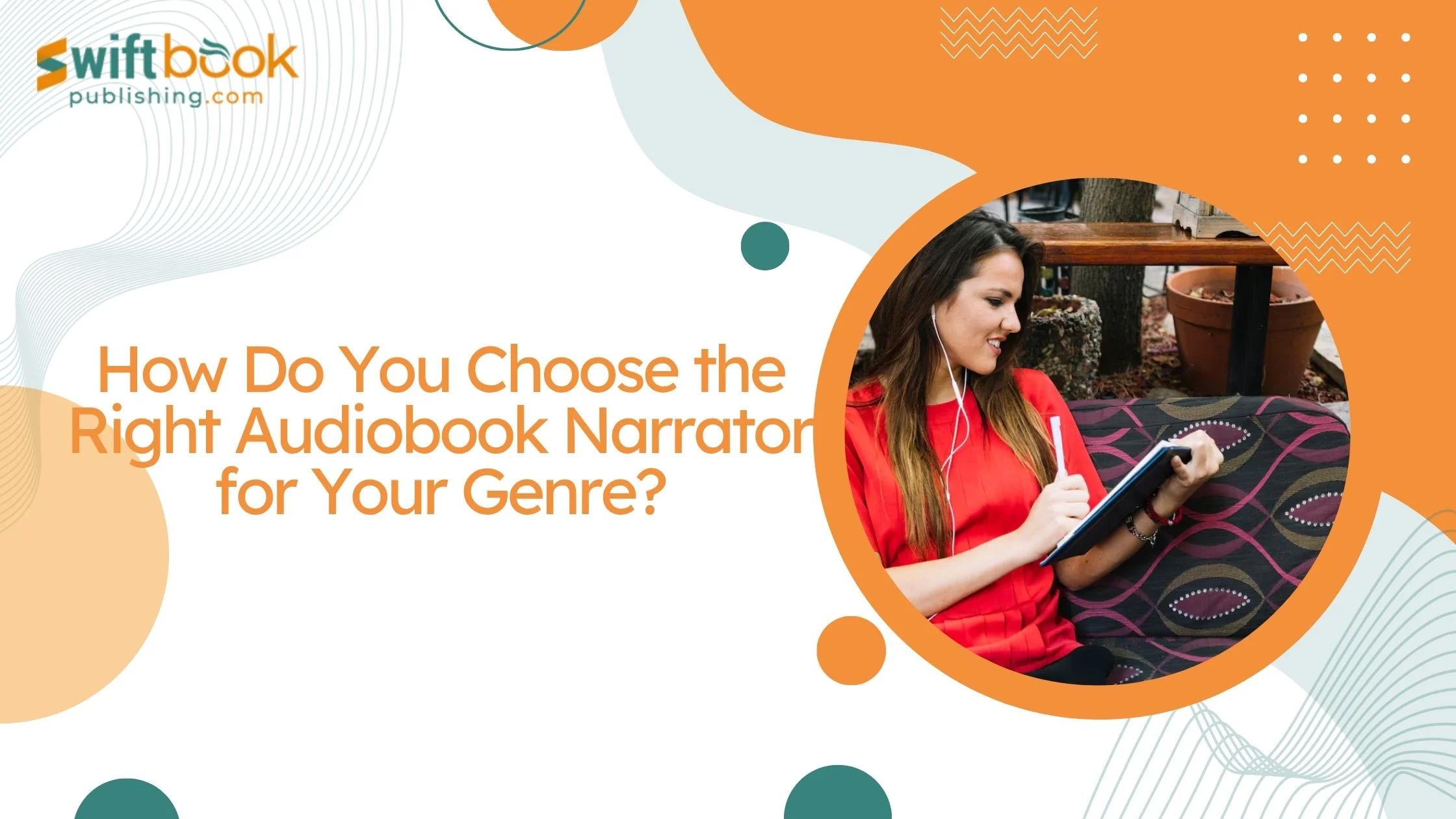
An audiobook narrator does more than read words aloud. Their voice, pacing, emotional control, pronunciation, and character interpretation shape how listeners experience the entire book.
Choosing the wrong narrator can make a strong manuscript feel flat, confusing, or disconnected from its intended audience. The right narrator can clarify the story, strengthen its emotional impact, and keep listeners engaged across several hours.
Authors who need to choose audiobook narrator options should evaluate more than vocal attractiveness. Genre experience, performance style, technical quality, availability, and audience expectations all matter.
Define the Required Listening Experience
Begin by identifying how the audiobook should make listeners feel. The ideal performance for a psychological thriller will differ from the voice needed for a light romance, business guide, memoir, or children’s story.
Write down the desired qualities, such as:
- Warm and conversational
- Tense and controlled
- Authoritative and professional
- Intimate and reflective
- Energetic and humorous
- Calm and reassuring
- Dark and atmospheric
- Youthful and expressive
The narrator should support the book’s emotional promise without exaggerating it. A suspense novel may require restraint instead of constant dramatic intensity. A professional guide may need confidence without sounding like a formal lecture.
Clear direction makes it easier to compare auditions fairly.
Use Genre as the First Filter
Narrators often specialize in particular genres because each category requires different performance skills.
Romance
Romance narration depends heavily on emotional credibility, dialogue, chemistry, and character distinction. The narrator should communicate attraction, conflict, vulnerability, and humor without making the performance feel forced.
Dual or duet narration may suit books with alternating romantic viewpoints, although it can increase production complexity and cost.
Mystery and Thriller
Mystery and thriller narrators need strong pacing and tension control. They should maintain suspense while keeping clues, dialogue, and character identities understandable.
An overly dramatic performance may reveal too much or make every scene feel equally intense.
Fantasy and Science Fiction
These genres may include large casts, invented terms, unfamiliar locations, and complex worldbuilding. Narrators need consistency across voices, accents, pronunciations, and multiple installments.
A detailed pronunciation guide is especially important.
Memoir
Memoir narration should feel personal and emotionally honest. Some authors narrate their own memoirs because readers want to hear the story in the writer’s voice. However, professional narration may be stronger when the manuscript requires advanced performance skills.
Nonfiction
Business, coaching, self-help, and educational books need clarity, authority, and natural pacing. The narrator should make complex information understandable without sounding detached.
A narrator with the wrong genre background may have an excellent voice but still misunderstand the book’s rhythm and audience expectations.
Conduct Target Audience Research
Effective Target Audience Research should influence narrator selection. Consider the age, interests, listening habits, and expectations of the intended audience.
Review comparable audiobooks and listen to their samples. Pay attention to:
- Narrator age and vocal tone
- Performance speed
- Accent
- Character treatment
- Emotional intensity
- Review comments
- Listener complaints
- Production quality
Do not copy another book’s performance style. Use the research to understand what listeners in the category already recognize and value.
For example, listeners of practical leadership books may prefer direct, confident narration. Cozy mystery audiences may respond to warmth, humor, and clearly distinguished characters.
Decide Whether the Author Should Narrate
Author narration can create authenticity, especially for memoirs, personal development books, and professional nonfiction. Readers may appreciate hearing the author explain ideas or recount personal experiences directly.
However, authors should consider whether they can:
- Read naturally for extended sessions
- Maintain consistent energy
- Control breathing and pacing
- Pronounce every term correctly
- Perform dialogue effectively
- Record clean audio
- Accept production direction
- Correct errors without frustration
A recognized expert with a distinctive public voice may benefit from self-narration. An author who feels uncomfortable behind a microphone may create a better audiobook by hiring a professional.
The decision should serve listeners, not the author’s pride or budget alone.
Prepare the Manuscript Before Auditions
Complete audiobook manuscript preparation before asking narrators to audition. The script should be edited, proofread, and adapted for listening.
Review the final proofreading checklist to confirm that the text contains no missing words, inconsistent names, incorrect chapter titles, or factual errors.
The narrator should also receive:
- A book summary
- Character descriptions
- Pronunciation notes
- Tone instructions
- Accent requirements
- Intended audience details
- Series information
- Sample chapters
- Performance cautions
Do not send an unedited manuscript with the expectation that the narrator will correct it during recording. Narrators may flag obvious errors, but manuscript editing is not normally part of their role.
Write an Effective Audition Passage
The audition script should represent the actual demands of the book. Do not choose the easiest page simply because it sounds polished.
For fiction, include a passage with:
- Narrative description
- Dialogue
- Emotional change
- More than one character
- A difficult name or term
For nonfiction, include:
- Explanatory material
- Lists or structured information
- Technical language
- A personal example
- A transition between ideas
A sample of two to five minutes is usually enough to identify major strengths and weaknesses. Ask every narrator to record the same passage so comparisons remain fair.
Evaluate More Than Vocal Beauty
A pleasant voice does not automatically create a good audiobook. Listen for performance control and consistency.
Evaluate:
- Clarity
- Pacing
- Breath control
- Emotional accuracy
- Pronunciation
- Character distinction
- Tone
- Sentence interpretation
- Natural pauses
- Listener comfort
Ask whether the narrator sounds believable rather than theatrical. Consider whether the performance would remain enjoyable after several hours.
Use headphones during evaluation and listen in a normal environment, such as a car or office, not only through studio speakers.
Assess Character Voices Carefully
Fiction narrators may need to perform characters of different ages, backgrounds, and personalities. Character voices should be distinct enough to follow without becoming distracting.
Avoid requiring exaggerated accents or stereotypical performances. The narrator should approach cultural, regional, and linguistic differences respectfully.
Authors should provide relevant context but avoid controlling every vocal choice. Professional narrators often produce stronger results when given the emotional purpose of a scene rather than detailed instructions for each sentence.
For a series, ask whether the narrator can maintain the same voices across future books.
Review Pronunciation and Accent Requirements
List every name, location, foreign word, acronym, and invented term that could be pronounced in more than one way.
Audio samples are often more reliable than written phonetic spellings. Record the intended pronunciation or provide a trusted reference when possible.
Accent requirements should be based on the story, characters, and audience. A convincing accent can strengthen the experience, while an inconsistent or inaccurate one can distract listeners.
Ask for an audition that includes any important accent before signing the agreement.
Examine Technical Audio Quality
Some narrators work from professional studios, while others use home recording spaces. Either setup can produce strong results when it meets distribution standards.
Listen for:
- Background noise
- Echo
- Mouth clicks
- Uneven volume
- Distortion
- Poor microphone quality
- Excessive processing
- Noticeable edits
Ask whether the narrator provides raw narration only or finished, mastered files. Some narrators include editing and mastering, while others work with separate audio engineers.
Professional Audiobook Services may handle casting, direction, recording, editing, proof listening, mastering, and distribution. Review the exact service scope before comparing prices.
Compare Payment Structures
Narrator compensation may be based on:
- Per-finished-hour payment
- Royalty sharing
- Royalty share plus
- Flat project fee
- Union rates
- Custom agreements
Per-finished-hour pricing is based on the length of the completed audiobook, not the number of hours spent recording. One finished hour may require several hours of performance, editing, and correction.
Royalty sharing reduces upfront costs but divides future earnings. It may also require exclusivity or a long-term agreement.
Consider:
- Estimated audiobook length
- Narrator experience
- Production services included
- Expected sales
- Distribution model
- Revision terms
- Payment schedule
A lower quote may exclude editing, mastering, or pickup sessions, making the final cost higher than expected.
Confirm Availability and Deadlines
A narrator may be perfect for the book but unavailable during the intended production period.
Ask about:
- Recording start date
- Estimated completion date
- Proof-listening schedule
- Correction turnaround
- Promotional availability
- Future series availability
Leave enough time for review and corrections before announcing an audiobook release date.
Rushed production may lead to inconsistent performance, editing errors, or missed distribution deadlines.
Use a Written Agreement
The contract should explain:
- Payment terms
- Production schedule
- File requirements
- Narrator credit
- Revision limits
- Pickup policies
- Distribution rights
- Exclusivity
- Royalty arrangements
- Cancellation terms
- Artificial intelligence usage restrictions
- Promotional permissions
Clarify whether the narrator can use audio samples in a portfolio and whether the author can use the narrator’s name or likeness in advertising.
Rights and compensation should never depend only on informal messages.
Coordinate Narration With the Author Brand
Narrator selection should support How to Build an Author Brand Before Launch. The performance becomes part of how readers recognize the author’s work.
A serious nonfiction author may need a polished, credible voice across multiple titles. A fantasy series may benefit from keeping one narrator throughout the complete story.
Authors learning How to Market a Book as a First-Time Author should include the audiobook in their broader release plan. Share approved samples, narrator interviews, behind-the-scenes clips, and retailer links through email and social media.
Professional Book Marketing Services can help coordinate audiobook positioning, paid promotion, media outreach, and audience targeting.
Match the Audio With the Visual Brand
The audiobook cover and retailer listing should remain consistent with the print and ebook editions.
A professional book cover design brief should explain how the artwork will adapt to square audiobook dimensions. Important text must remain readable at a small size.
Understanding book cover colors by genre can also support consistent positioning. The narrator’s style, cover palette, description, and category should communicate the same listening experience.
A dark, tense thriller cover paired with lighthearted narration creates a confusing promise.
Review Platform and Subscription Positioning
Authors researching Unlocking Kindle Unlimited Audiobooks, How To Listen to Audiobooks Using Your Kindle Paperwhite, or A Comprehensive Guide For Kindle Unlimited should verify current platform features before making promotional claims.
Audiobook access may depend on distribution agreements, device compatibility, subscription eligibility, geographic availability, and whether digital editions are correctly linked.
The narrator cannot solve metadata or platform problems. Authors should confirm retailer information, pricing, edition links, and distribution requirements separately.
Complete a Full Audio Review
After production, listen to the complete audiobook while following the final script.
Check for:
- Missing sentences
- Repeated lines
- Mispronunciations
- Incorrect character voices
- Long pauses
- Background noise
- Chapter-order problems
- Inconsistent volume
- Abrupt edits
- Incorrect credits
Submit corrections in one organized document. Include the chapter, timestamp, incorrect audio, and requested correction.
The final decision to choose audiobook narrator talent should balance performance, professionalism, technical quality, and audience fit. A voice may sound impressive in isolation, but the right narrator is the person who can carry the book’s meaning from the first sentence to the final chapter.
Frequently Asked Questions
How many narrator auditions should an author review?
Authors should review enough auditions to compare different approaches, often between five and fifteen. Quality and genre relevance matter more than collecting a large number.
Should one narrator perform every character?
A single narrator commonly performs the full book, including all characters. Dual narration, duet narration, and full-cast production are also available when the format suits the story and budget.
Can an author request a specific accent?
Yes. Authors should describe the required accent clearly and request an audition containing relevant dialogue. Accuracy and consistency should be evaluated before hiring.
Is a famous narrator always the best choice?
No. A recognized narrator may attract attention, but genre fit, performance quality, availability, and budget remain more important than name recognition alone.
Should the same narrator return for every book in a series?
Keeping the same narrator can support continuity and listener recognition. Authors should discuss future availability before beginning a long series.
Who approves the final audiobook?
The author or rights holder usually reviews and approves the final files. When a publisher or production company manages the project, approval responsibilities should be stated in the agreement.