
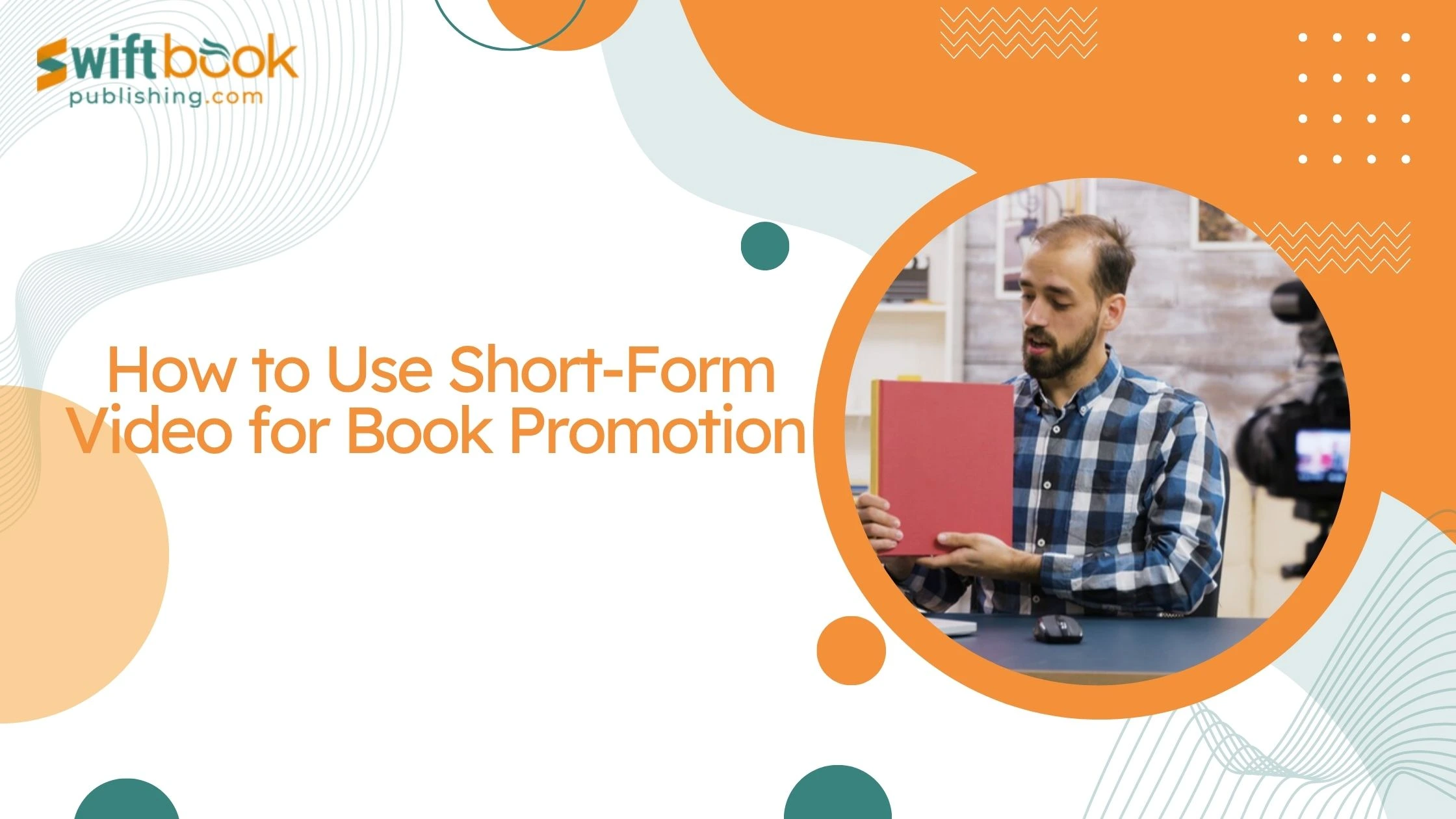
Short-form video is one of the most practical ways authors can promote a book because it helps readers understand the book quickly, visually, and emotionally. Instead of asking people to read a long description first, short videos can introduce the book’s message, genre, mood, author story, cover, reviews, or key promise in a few seconds.
Short-form video book marketing works because readers are already spending time on platforms like TikTok, Instagram Reels, YouTube Shorts, and Facebook Reels. These platforms are built around fast discovery. A short video can help an author reach people who may not be searching for the book yet but may become interested after seeing a strong hook, quote, scene, lesson, or behind-the-scenes moment.
For first-time authors, self-published writers, and hybrid publishing prospects, short-form video can support every stage of the publishing journey. Before launch, it can build awareness. During launch, it can drive attention to the book. After launch, it can keep the book visible through reviews, reader reactions, educational clips, author branding, and repurposed content.
The key is not to post random videos and hope they work. Authors need a simple strategy. The video should connect to the book’s audience, genre, message, and publishing goals. It should also guide viewers toward a clear next step, such as visiting the author website, reading the book description, watching a book trailer, joining an email list, leaving a review, or buying the book on Amazon KDP.
Short-form video does not replace editing, manuscript preparation, ISBN, copyright, book formatting, book reviews, or publishing standards.
It helps readers notice the book once the foundation is ready.
Why Short-Form Video Matters for Authors
Authors often ask how to market a book when they are close to publishing. Many expect the answer to be ads, book reviews, press releases, or Amazon optimization. These tools can help, but short-form video has become one of the most useful parts of modern book marketing because it gives authors a way to show the book’s value quickly.
A reader may scroll past a static promotional graphic. But a short video with a strong opening line can create curiosity.
For fiction, short video can show mood, genre, character tension, tropes, atmosphere, or emotional conflict. A romance author can create a video around “second chances and old wounds.” A fantasy author can show the world, magic system, or central conflict. A thriller author can use a line that creates suspense. A children’s book author can use color, movement, and a simple read-aloud moment.
For nonfiction, short video can show expertise. An author can share one lesson from the book, one mistake readers should avoid, one personal insight, or one question the book answers.
Short-form video is useful because it can do several things at once:
Build author visibility
Introduce the book’s message
Support social media promotion
Create launch excitement
Repurpose book marketing content
Increase reader trust
Encourage book reviews
Strengthen author branding
A book still needs a strong publishing foundation, but video helps more readers discover that foundation.
Short-Form Video and the Publishing Journey
Short-form video should not begin only after the book is published.
Authors can use it before, during, and after launch. Each stage has a different purpose.
Before publishing, short-form video can help build an audience. You can share why you wrote the book, what problem it solves, what inspired the story, what genre it belongs to, and what readers can expect. This is useful even before the final cover is ready.
During the launch period, short videos can announce the release, show the cover, highlight early reviews, explain where the book is available, and encourage readers to buy or share.
After publishing, short videos can keep the book alive. You can share reader reactions, answer questions, explain themes, discuss the writing process, share review quotes, and connect the book to seasonal or trending topics.
This matters for both self-publishing and hybrid publishing. In conversations about hybrid publishing vs self publishing, authors often focus on production differences. But marketing matters in both models. A hybrid publisher may help prepare the book, but the author still needs visibility. A self-published author may control every step, but control does not create sales unless readers know the book exists.
Short-form video gives both types of authors a flexible way to stay visible.
Start With a Clear Book Marketing Goal
Before creating videos, decide what each video should do.
Not every video should directly sell the book. Some videos build awareness. Some build trust. Some educate. Some entertain. Some encourage reviews. Some support launch momentum. Some strengthen the author brand.
A good short-form video strategy begins with simple goals:
Introduce the author
Explain the book’s purpose
Show the book cover
Promote a launch date
Share a quote or lesson
Build genre interest
Encourage preorders
Drive traffic to Amazon KDP or a website
Ask readers to leave honest reviews
Grow an email list
Build trust before publication
If every video says only “buy my book,” viewers may lose interest. Book promotion works better when authors provide useful, emotional, or interesting content around the book.
For example, a nonfiction author can create a video explaining one idea from the book. A romance author can create a video about the emotional conflict between the main characters. A memoir author can share what inspired the book. A business author can share one mistake the book helps readers avoid.
The goal shapes the content.
A video without a purpose is just noise.
Know Your Reader Before Creating Content
Short-form video works best when it speaks to the right reader.
Many authors make the mistake of creating content for everyone. But books are rarely for everyone. A fantasy novel, grief memoir, leadership guide, children’s book, romance novel, self-help book, and poetry collection all need different messaging.
Before creating videos, ask:
Who is this book for?
What problem, emotion, or experience does the book address?
What does the reader care about?
What would make them stop scrolling?
What platforms do they use?
What kind of videos do they already watch?
What tone will connect with them?
Reader awareness helps make content more specific.
For example, if your book is for first-time entrepreneurs, your videos may focus on business lessons, mindset, mistakes, and practical advice. If your book is for romance readers, your videos may focus on tropes, emotional tension, character chemistry, and story mood. If your book is for parents, your videos may focus on the child’s experience, learning value, and emotional benefit.
This is part of strong book marketing strategies. Marketing is not only about visibility. It is about reaching the right people with the right message.
A clear reader leads to better videos.
Build Short Videos Around a Strong Hook
The first few seconds matter most.
A short-form video needs a hook that makes viewers pause. The hook can be spoken, shown as on-screen text, or introduced through a strong visual. It should quickly tell the viewer why the video matters.
Examples for fiction authors:
“This book is for readers who love secrets, betrayal, and second chances.”
“What if the person you loved most was the one hiding the truth?”
“A fantasy world where magic is illegal and one girl is born with too much of it.”
“A small town mystery where every neighbor has a motive.”
Examples for nonfiction authors:
“Three things authors should do before publishing.”
“Most first-time authors make this book marketing mistake.”
“Here is how to prepare your manuscript before launch.”
“If you are publishing on Amazon KDP, do not skip this step.”
A hook should be clear, not confusing. It should speak to reader intent. It does not need to be dramatic every time, but it should give people a reason to keep watching.
A weak hook says, “My book is out now.”
A stronger hook says, “If you are publishing your first book this year, this is what you should prepare before launch.”
The second version offers value.
Value keeps viewers watching.
Platform-Specific Tips for Authors
Different platforms reward different styles of content.
Authors do not need to be everywhere, but they should understand how each platform works before posting the same video in every place.
TikTok
TikTok is strong for discovery, personality, trends, emotional hooks, book tropes, storytelling, and short educational videos. Fiction authors can use tropes, character conflict, aesthetic mood, and reader reactions. Nonfiction authors can share quick tips, lessons, mistakes, and personal insights.
Good TikTok content often feels direct and natural. It does not need to look overly polished. Strong captions and quick hooks matter.
Instagram Reels
Instagram Reels work well for visual author branding, cover reveals, quote videos, launch announcements, behind-the-scenes content, and polished short videos. Authors can also use carousels, Stories, and pinned posts to support the video content.
Instagram is useful for building a consistent author brand because visuals matter more.
YouTube Shorts
YouTube Shorts can help with search and long-term discoverability. Authors can use Shorts to answer reader questions, share book tips, post book trailer clips, and create educational content connected to the book’s topic.
A nonfiction author can build authority through short answers. A fiction author can create character teasers, genre hooks, and trailer-style clips.
Facebook Reels
Facebook Reels may work well for memoirs, nonfiction, local author audiences, community-based promotion, faith-based books, family stories, and older reader segments. Facebook Groups can also support book discussion, launch communities, and reader engagement.
LinkedIn Video
LinkedIn is useful for nonfiction authors, business authors, coaches, consultants, entrepreneurs, memoir writers with professional lessons, and thought leaders. Short videos can support expertise, credibility, and author branding.
Platform choice should match the book and reader.
Do not chase every platform at once.
Content Ideas for Fiction Authors
Fiction authors can use short-form video to create mood and curiosity.
Readers often choose fiction because of emotion, genre, character, and story promise. Short videos can highlight those elements quickly.
Useful fiction video ideas include:
Book trope videos
Character introductions
Mood-based clips
Quote reveals
Book trailer snippets
Cover reveal videos
Playlist or soundtrack videos
Point-of-view videos
Scene inspiration videos
Worldbuilding details
Villain or conflict teasers
Reader reaction posts
Behind-the-scenes writing videos
Launch countdowns
Examples:
“Read this if you like enemies to lovers with emotional scars.”
“A mystery where the victim left one clue no one understands.”
“This fantasy novel begins with a forbidden map.”
“A horror story about a house that remembers every person who died inside.”
Fiction videos should not explain the entire plot. They should create curiosity. A strong short video makes the reader want to click, search, save, or learn more.
Show enough to attract attention.
Hold back enough to create interest.
Content Ideas for Nonfiction Authors
Nonfiction authors can use short-form video to build trust and authority.
Readers often buy nonfiction because they want help, insight, transformation, education, or expertise. Short videos can show the author’s knowledge before the reader buys the book.
Useful nonfiction video ideas include:
One lesson from the book
One mistake readers should avoid
A quick tip from a chapter
Author story behind the book
Problem and solution videos
Myth vs fact videos
Mini teaching clips
Reader question answers
Launch announcement videos
Review quote videos
Behind-the-scenes publishing journey
Book signing or event clips
Examples:
“Three things to do before you publish your first book.”
“One reason your book marketing is not working.”
“How to get book reviews without using fake tactics.”
“What authors should know about ISBN, copyright, and book formatting.”
“If you are comparing hybrid publishing vs self publishing, start with this question.”
Nonfiction short-form video should be clear and useful. The author should not give away everything in the book, but each video should offer enough value to build credibility.
A helpful author becomes a trusted author.
Use Short-Form Video Before Publishing
Short videos can support the pre-publication stage.
Before the book is live, authors can use video to build awareness and prepare readers. This is especially useful if you are still in editing, formatting, cover design, or launch planning.
Pre-publication videos can include:
The reason you wrote the book
The problem your book solves
The genre or audience of the book
Behind-the-scenes writing updates
Cover design process
Editing progress
Launch date announcement
Preorder announcement
Early reader reactions
Book title reveal
Manuscript preparation tips
This also connects to prepare manuscript for publishing. Authors can share the process in a way that educates readers and builds anticipation.
For example:
“I just finished proofreading my book, and here is why this stage matters.”
“Today I am reviewing the final book formatting before launch.”
“Before I publish on Amazon KDP, I am checking my description, categories, and keywords.”
These videos make the publishing journey part of the marketing.
Readers enjoy seeing progress.
Use Short-Form Video During Launch
Launch content should create urgency and visibility.
During launch week, your short videos should make it clear that the book is available, who it is for, why it matters, and where readers can get it.
Launch video ideas include:
Book available now
Launch day announcement
Book trailer clip
Author thank-you video
Review quote video
Reader reaction video
What the book is about
Who should read it
Where to buy it
Launch discount announcement
Live event or signing clip
Amazon KDP availability update
Your CTA should be simple. Do not overload the viewer with too many steps.
Examples:
“Available now on Amazon.”
“Read the first chapter today.”
“Order your copy this week.”
“Visit the link in bio.”
“Leave an honest review if you have read it.”
A launch strategy should use repetition without becoming boring. Change the angle of each video. One can focus on the book’s message. Another can focus on the author story. Another can focus on a review. Another can focus on the reader benefit.
The same book can be promoted many ways.
Use Short-Form Video After Launch
Book marketing does not stop after launch week.
Many books grow slowly through consistent visibility. Short-form video gives authors a way to keep promoting without saying the same thing every day.
Post-launch video ideas include:
Reader reviews
Questions from readers
Favorite quotes
Book club discussion prompts
Behind-the-scenes updates
What inspired a chapter
Lessons from the publishing process
Author reflections
Seasonal tie-ins
Related topic tips
Book trailer reposts
Media appearance clips
Reader testimonial videos
This is also a good time to focus on how to get book reviews. Authors can create polite review request videos.
Example:
“If you have read the book, your honest review helps other readers decide if it is right for them.”
This kind of request is simple, ethical, and reader-focused.
Post-launch promotion builds long-term trust.
A book does not expire after release day.
How AI Book Marketing Can Help With Short Videos
AI book marketing can help authors plan and create short-form video content more efficiently.
AI tools can help brainstorm video hooks, create content calendars, draft captions, turn book descriptions into video scripts, repurpose blog posts into reels, and create platform-specific content ideas. This can save time, especially for authors who feel unsure what to post.
For example, one book description can become:
A 15-second TikTok script
A YouTube Shorts hook
An Instagram Reel caption
A Facebook video post
A LinkedIn author branding clip
A launch week content calendar
AI can also help authors create variations. You might ask for ten hooks for a self-help book, five short video ideas for a memoir, or caption options for a cover reveal.
However, AI should not replace your voice. Generic AI content often sounds flat or repetitive. Authors should edit AI-assisted content so it feels personal, accurate, and aligned with the book.
Use AI for speed and structure.
Use your own judgment for authenticity.
Short-Form Video and Author Branding
Short-form video can strengthen your author brand.
Your author brand is how readers recognize your voice, values, genre, message, and personality. It helps readers understand what kind of books you write and why they should follow you.
Video is useful because readers can see and hear you. Even simple videos can create connection. You can speak directly to your audience, explain your book’s purpose, share your publishing journey, or show what makes your story unique.
For fiction authors, branding may focus on genre, themes, mood, character types, or emotional experience. For nonfiction authors, branding may focus on expertise, transformation, credibility, and reader benefit.
A consistent video style can help. Use similar tone, captions, colors, topics, and messaging. Keep your book cover visible when relevant. Pin important launch videos to your profile. Make it easy for viewers to understand who you are.
Author branding is not only about selling one book.
It is about building recognition for the long term.
Book Reviews and Reader Trust
Short-form video can help you build and share reader trust.
Readers often look for proof before buying. Reviews, testimonials, ratings, endorsements, and reader reactions can help them decide.
Authors can turn reviews into short videos by placing a review quote on screen, reading a short excerpt from a review, or thanking readers for their feedback. Always use ethical and honest review practices.
Video ideas include:
“Here is what an early reader said.”
“One review that made my week.”
“Why reviews matter for new authors.”
“If this book helped you, an honest review helps other readers find it.”
You can also explain how reviews support independent authors. Many readers are willing to help when they understand why it matters.
Avoid fake reviews or manipulative tactics. Reader trust is more valuable than inflated numbers.
A review strategy should be honest, consistent, and respectful.
Book Publishing Foundations Still Matter
Short-form video can attract attention, but the book still needs to meet publishing standards.
Before promoting heavily, make sure the book is professionally prepared. This includes editing, proofreading, cover design, ebook formatting, print formatting, ISBN planning, copyright awareness, and platform setup.
The phrase ISBN copyright book formatting may sound technical, but these details affect how professional the book appears. Readers may forgive small issues, but repeated formatting problems, poor layout, weak covers, and obvious editing mistakes can damage credibility.
If you are using Amazon KDP, review your files carefully before launch. Check the ebook preview. Check the print proof. Review the description. Make sure categories and keywords match the book. Confirm that your author page is complete.
Short-form video can bring readers to your book page.
Publishing quality helps convince them to buy and trust it.
Marketing cannot fix a book that was rushed into publication.
How Book Marketing Services Can Help
Book Marketing Services can help authors build a short-form video plan that connects with the larger launch strategy.
This may include content planning, platform selection, video scripts, captions, book trailer clips, review graphics, author branding, launch calendars, AI book marketing support, social media promotion, and post-launch visibility.
Professional support can be especially useful for authors who feel overwhelmed. Many first-time authors know they should promote their book on social media, but they do not know what to say, how often to post, what platforms to use, or how to turn one book into weeks of content.
A good marketing service should connect videos to real goals. The goal may be awareness, launch traffic, review building, email signups, Amazon visibility, or reader engagement.
Short-form video should not stand alone.
It should support the full book marketing strategy.
Common Short-Form Video Mistakes Authors Should Avoid
One common mistake is starting too late.
If you only begin posting on launch day, you miss the chance to build awareness before the book is available. Start early, even if the book is still in editing or formatting.
Another mistake is making every video a direct sales pitch. Promotion is important, but readers need variety. Mix educational, personal, emotional, and promotional content.
Some authors use weak hooks. If the first line does not create interest, viewers may scroll away. Begin with the reader’s problem, emotion, curiosity, or genre interest.
Another mistake is ignoring captions. Many viewers watch videos without sound. Use clear on-screen text.
Some authors post without a CTA. Every video does not need to sell, but many should guide viewers toward a next step.
Another mistake is inconsistent branding. If every video looks and sounds completely different, readers may not remember the author.
Finally, do not promote a book that is not ready. Make sure the manuscript, cover, formatting, and publishing setup meet professional standards.
Practical 30-Day Short-Form Video Plan for Authors
A simple 30-day plan can help authors start without feeling overwhelmed.
Week 1: Build Awareness
Post videos about why you wrote the book, who it is for, what topic or genre it covers, and what readers can expect.
Examples:
“Why I wrote this book.”
“This book is for readers who struggle with…”
“If you enjoy this genre, here is what my book offers.”
Week 2: Share Value and Story
Post tips, quotes, themes, character insights, or lessons from the book.
Examples:
“One lesson from chapter one.”
“A quote from the book that explains its message.”
“The question that started this story.”
Week 3: Build Trust
Post early reviews, behind-the-scenes publishing updates, cover details, author story, or proof of preparation.
Examples:
“How I prepared my manuscript for publishing.”
“What an early reader said.”
“Why book formatting matters before launch.”
Week 4: Promote the Next Step
Post launch reminders, availability updates, review requests, book trailer clips, or platform-specific CTAs.
Examples:
“The book is available now.”
“Here is where to read it.”
“If you have read it, an honest review helps.”
This plan can be repeated with new angles after launch.
Consistency matters more than perfection.
Frequently Asked Questions
What is short-form video book marketing?
Short-form video book marketing is the use of brief videos on platforms like TikTok, Instagram Reels, YouTube Shorts, and Facebook Reels to promote a book, build author visibility, and connect with readers.
How can authors use short-form video before publishing?
Authors can share writing updates, cover reveals, manuscript preparation, launch countdowns, early reviews, author stories, and topic-based content before the book is published.
Which platforms are best for book promotion videos?
TikTok, Instagram Reels, YouTube Shorts, Facebook Reels, and LinkedIn can all work depending on the book and audience. Fiction often works well on TikTok and Instagram, while nonfiction can perform well on LinkedIn and YouTube Shorts.
Can AI help with short-form video book marketing?
Yes. AI can help brainstorm hooks, captions, content calendars, video scripts, and repurposed content. Authors should still edit the content to match their real voice and author brand.
Should authors use Book Marketing Services for short-form video?
Book Marketing Services can help authors create a clear video strategy, write scripts, plan content, promote on social media, build author branding, and connect short videos to the full book launch strategy.
Final Thoughts
Short-form video book marketing helps authors make their books visible in a fast, reader-focused way.
It allows authors to share the book’s message, genre, mood, lessons, reviews, launch updates, and personal story through quick videos that are easy to watch and share. For first-time authors, self-published writers, and hybrid publishing prospects, short-form video can support every stage of the publishing process.
But video works best when the book is professionally prepared and the marketing plan is clear. Authors should still focus on manuscript preparation, ISBN, copyright, book formatting, publishing standards, reviews, Amazon KDP optimization, author branding, and long-term promotion.
A short video can create attention.
A strong book and strategy turn that attention into reader trust.
For authors who need help planning content, promoting a launch, building visibility, and creating a stronger reader connection, Book Marketing Services can support short-form video, social media promotion, AI book marketing, book reviews, and long-term book marketing strategies.